How to resume a TTRPG campaign after a long break
The date is finally in the calendar. After several weeks, sometimes several months away, the campaign is coming back. Everyone is glad to return to the table, but nobody remembers quite the same story: one person still talks about the escape through the rain, another about the argument at the inn, while the GM is thinking about what those two scenes were meant to set in motion.
When that happens, the first instinct is often to find a complete recap and bring everyone up to speed. But resuming a TTRPG campaign does not require every name, clue, and detour to be restored. What matters is finding a shared starting point, then checking the few details that could genuinely change what happens next.
Find a shared starting point
Before opening notebooks and old message threads, let the memories return around the table. Where were the characters? Who still mattered to them? What seemed about to happen? The answers will be incomplete, but they will quickly reveal the scenes, relationships, and questions the group still wants to explore.
That first conversation is more than a memory test. It shows which parts of the campaign stayed alive during the break. The GM may remember an important reveal, while a player mostly remembers the clumsy guard who made everyone laugh. One moves the plot forward; the other recalls why the group enjoyed sharing this story in the first place.
A forgotten plot thread does not have to be forced back into the recap. It can stay in the background and return later, when the characters meet the relevant person or visit that place again. If nobody reacts when it comes up, it may not be a memory problem at all. That thread may simply matter less to the group now.
Separate what the group, the characters, and the GM know
Things get trickier when every piece of information is folded into a single version of events. The group shares some facts, such as the enemy they defeated or the city where the last game ended. Individual characters may have more personal memories, while the GM knows about consequences and secrets that have never been revealed.
Imagine an enemy escaped while the party was crossing a rope bridge. One player remembers deliberately leaving the enemy a way out. Another thinks the escape was only possible because a rope snapped. The GM knows that an unseen intervention brought the bridge down.
The shared recap can stop at what everyone knows: the enemy escaped during the crossing. The first player can be reminded privately about their character's choice, while the GM keeps the hidden explanation behind the screen. Nobody has to impose one version on everyone else before play can resume, and the secret can still surface at the right moment.
This distinction also helps when someone has forgotten something their character learned only a few hours ago in the story. Giving that information back does not spoil the game. The break happened to the person at the table, not to the character who just lived through the scene.
Check only the details that change what comes next
Once the broad picture has returned, there will almost always be a few gaps. The exact name of an inn or the color of a banner can wait if nobody needs it. But knowing who carries the cursed key, whether a debt was paid, or what a character promised could change a decision in the very first scene.
The useful question is not "have we recovered everything?" but "what would change the way we play right now?" If the doubt affects neither a choice, a relationship, nor what the characters are meant to know, an approximate description is enough. The missing detail can return later, when it has a natural place in the story again.
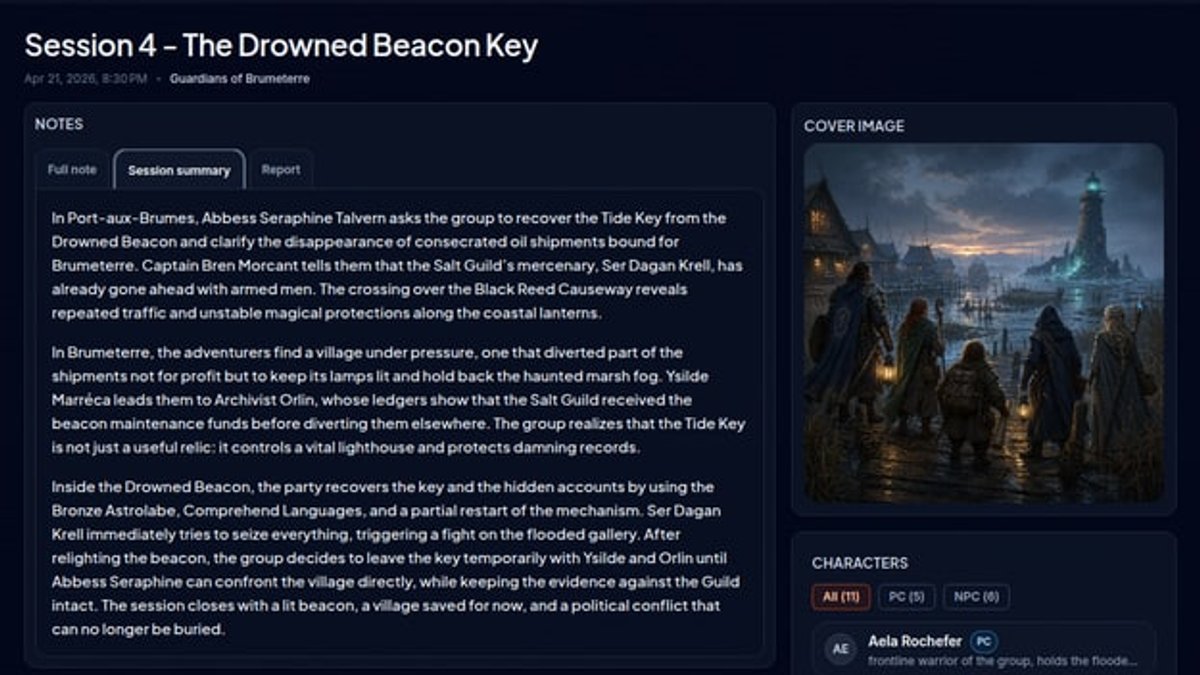
When a detail could have consequences, look only for the relevant passage. A notebook, shared document, or old message thread will often be enough. If the campaign lives in VoLog, the session summary can bring back the broad picture, then VoLog Search can help you find a particular NPC, location, or decision. Use the transcript when the exact words matter, or the full note when you need to reconstruct how a scene unfolded.
That focused check keeps the return from turning into an archive session. Notes protect the decisions the group already made, but they do not need to correct every fuzzy memory or decide which part of the campaign should return to the foreground.
Turn the first game back into a new reference point
Once the group shares enough information to understand the situation, it is usually better to play than to keep recapping. The first game after the break will create its own shared memory. Some plot threads will naturally return, others will remain in the background, and the characters may choose a direction nobody expected before the interruption.
After the game, a few lines are enough to preserve this new beginning: the relationships that still matter, the facts the group clarified, and the situation the characters were in when play stopped. There is no need to tidy every old note. During the game, you can also keep track of a TTRPG game without writing everything, then fill in what is worth keeping afterward.
You can often tell the campaign is truly back when someone says, "Oh, right. That is why we did not trust him." The character's name returns, other people fill in the scene, and the conversation gradually leaves the recap behind. Not every detail has returned, but the group is sharing the same story again and can finally add what happens next.